Photo by Unsplash
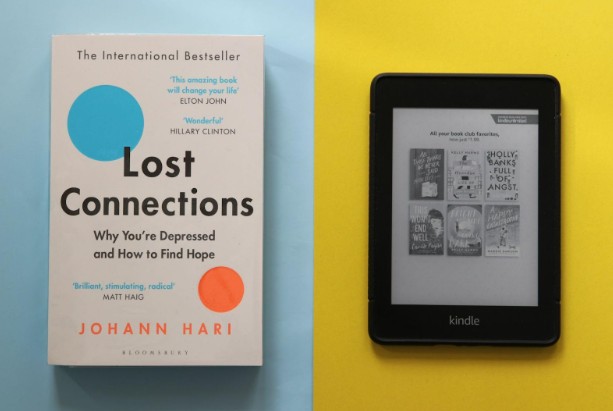
The debate between printed and digital books has been ongoing for over two decades, but 2025 marks a turning point. With the rise of subscription-based reading platforms, AI-curated recommendations, and environmental consciousness, the line between traditional reading and digital consumption continues to blur. The global book market is no longer divided by format—it’s driven by reader behavior, accessibility, and technology’s ability to make reading more personal than ever.
In this landscape, understanding how readers engage with text—whether on paper
or screen—has become an analytical pursuit. Students, researchers, and writers
now rely on digital ecosystems for studying and content creation, often
turning to tools that save time and enhance quality. The great opportunity is
a platform to edit your college essay,
which helps to analyze, summarize, and interpret complex information drawn
from both print and digital sources, reflecting a modern balance between human
insight and technological precision.
From tactile experiences to data-driven personalization, the story of reading in 2025 isn’t just about format—it’s about evolution.
Kindle vs Book Statistics: A Look at the Sales
When examining the sheer numbers, a surprising narrative unfolds. Despite the ubiquity of devices like the Kindle, physical books continue to dominate the market. Recent sales data reveal that print books consistently outsell their electronic counterparts, often by a commanding ratio of four to one. In 2023 alone, over 767 million print units were sold in the United States, showcasing the format’s incredible staying power.
However, this doesn’t mean the electronic book is losing ground. The ebook market is experiencing steady growth, with projections indicating that the global user base for e-readers will swell to 1.2 billion by 2027. This signifies a healthy, expanding market where digital formats are carving out a significant and permanent niche, not as a replacement for print, but as a popular alternative. The trend points toward a future of coexistence, where readers choose their preferred format based on context and convenience.
The Modern Reader vs E-Reader Statistics
Diving into reader demographics reveals fascinating insights that challenge common assumptions. One might think that younger, tech-native generations would exclusively favor digital reading. However, statistics show the opposite is true. A remarkable 75% of young adults aged 18 to 29
prefer reading physical books. This demographic, often tasked with writing lengthy essay papers, may find the focused environment of a print book more conducive to deep learning and concentration.
- Approximately 33% of adults are “hybrid readers,” seamlessly switching between print and digital formats.
- About 32% of Americans remain loyal to print, reading exclusively in the traditional format.
- Only a small fraction, around 9%, are e-book purists who have gone fully digital.
Why Are Paper Books Better Than E-books?
The persistent love for paper books vs. E-books goes far beyond simple nostalgia. The tangible nature of a physical book offers a unique and scientifically backed set of benefits that digital formats struggle to replicate. From cognitive advantages to pure sensory pleasure, the case for print remains incredibly strong.
Unpacking the Advantages of Paper Books
- Superior comprehension and retention: Reading on paper improves memory and recall. The physical act of turning pages and the book’s spatial cues help map information better.
- Reduced eye strain and improved sleep: Unlike screens, paper doesn’t emit blue light, avoiding eye fatigue and sleep disruption.
- A distraction-free experience: No pop-ups, notifications, or social media temptations—just immersive reading.
- The power of touch and ownership: The sensory feel, smell, and sound of a book are irreplaceable. You also truly own it—lend, gift, or display it.
Are E-books Better Than Paper Books? The Case for E-books
While the advantages of print are clear, one cannot dismiss the powerful arguments for why E-books are better than paper books in many scenarios. The electronic book has revolutionized accessibility and convenience, offering benefits that fit the modern lifestyle.
Exploring the Advantages of E-books
- Unmatched portability: Carry thousands of books on one lightweight device.
- Enhanced accessibility: Adjustable fonts, text-to-speech, and visual aid features make reading inclusive.
- Instant gratification: Purchase and start reading anytime, anywhere.
- Cost and environmental impact: Subscription models and paper savings make e-books a sustainable option.
E-books vs Printed Books: A Head-to-Head Comparison
| Feature |
Physical Books |
E-books |
| Reading Experience | Tactile, immersive, promotes deep focus. | Customizable and convenient, but can distract. |
| Portability | Bulky when carrying multiple books. | Extremely portable with thousands of titles. |
| Cost | Pay per book; used copies cheaper. | Device cost upfront, but e-books often cheaper. |
| Ownership | Full ownership and resale rights. | Licensed access, limited sharing. |
| Accessibility | Fixed font size and format. | Adjustable text and audio options. |
| Durability | Vulnerable to wear and tear. | Digital files never fade but rely on devices. |
| Environmental Impact | Paper production and shipping footprint. | High initial footprint but sustainable long-term. |
| Note-Taking | Easy to highlight and annotate. | Digital notes available but less intuitive. |
FAQ
Is it faster to read on a screen or on paper?
Most studies show reading is faster on screen but comprehension is stronger on paper.
Which format is better for the environment?
It depends. An e-reader equals about 36 paperbacks in carbon footprint. Reading more than that makes it greener; otherwise, used print books or libraries are best.
|